


Table of Contents
- Why Bother Brewing Coffee in a Truck Cab?
- What You'll Need Before You Start Brewing
- Step-by-Step: How to Brew Coffee in a Truck Cab
- Choosing a Coffee Maker for Semi Truck Use
- How to Make Coffee in a Truck Without a Coffee Maker
- Camp Stove Coffee: What to Know Before You Fire It Up
- Fire, Burn, and Spill Prevention in a Tight Cab
- Common Mistakes That Ruin Cab Coffee
- Frequently Asked Questions
Last Updated: October 5, 2026
Why Bother Brewing Coffee in a Truck Cab?
Learning how to brew coffee in a truck cab changes your whole day. Truck stop coffee means long lines, unpredictable quality, and a dent in your wallet every single stop. Brewing your own means fresh coffee on your schedule, at a fraction of the cost.
At Blacktop Life Coffee Co., we know this routine firsthand. Our company was founded by a long-haul truck driver, so we understand what a 14-hour haul does to your energy and your patience.

Here's the honest math: a daily truck stop habit adds up fast over a year, while a bag of good grounds and a thermos pay for themselves in a couple of weeks. You also control the strength, the timing, and the taste.
Below, we'll walk you through a complete cab brewing setup, from power and safety to a step-by-step brew you can run at a rest stop in under 15 minutes.
What You'll Need Before You Start Brewing
A reliable cab coffee setup comes down to three things: the right gear, safe power, and smart storage. Get these right and brewing becomes a two-minute habit instead of a hassle.
Core Equipment for a Cab Coffee Setup
You don't need much, and limited space is no excuse. Here's what most drivers keep within arm's reach:
- A brewing device: French press, AeroPress, or pour-over cone
- A way to heat water: 12V kettle, inverter-powered kettle, or camp stove
- A food-grade stainless steel thermos to hold hot water and finished coffee
- Grounds or instant coffee, sealed tight
- A small towel and a trash bag for cleanup
A Blacktop Life Coffee Co. 14oz Stainless Travel Mug with Handle fits a cupholder and keeps coffee warm without burning your hands. The spill-resistant snap-on cap matters more than you'd think on a bumpy stretch of highway.

Cab-Safe Power and Electrical Requirements
Power is where most drivers get into trouble. A 12V socket is fine for a small kettle, but it draws heavy current and can blow a fuse if you run it with other devices plugged in.
Check your truck's fuse rating before you buy anything. If you run an inverter, mount it in a ventilated spot and never leave it running unattended. For a full breakdown of safe electrical loads in vehicles, see NHTSA vehicle safety guidance.
Step-by-Step: How to Brew Coffee in a Truck Cab
Here is a complete procedure you can run at a rest stop in about 10 to 15 minutes, most of which is waiting on water. The measurements below assume a standard 12 oz mug.
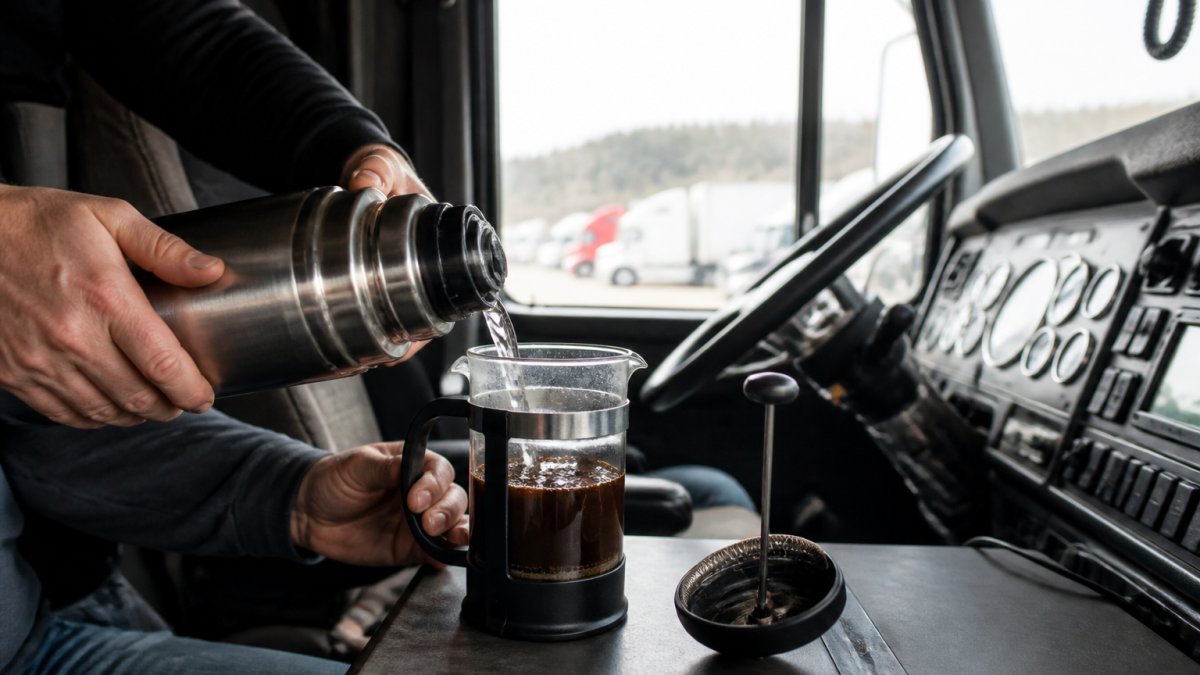
Step 1: Prep Your Water and Grounds
Start with fresh water and a clean press. Fill your kettle or thermos, then measure your grounds while the water heats.
- Coffee-to-water ratio: 1 to 2 tablespoons of grounds per 6 oz of water. For a 12 oz mug, use 2 to 4 tablespoons. A kitchen scale is more consistent: 1 gram of coffee per 16-17 grams of water for a balanced cup, or 1:15 for a stronger cup.
- Grind size: Medium for French press and pour-over, medium-fine for AeroPress. Too fine clogs filters; too coarse tastes weak.
- Water temperature: 195-205°F (90-96°C). If you boil water, let it sit 30-45 seconds before pouring. Boiling water scorches grounds and turns coffee bitter.
Step 2: Brew and Time It
Pour hot water over the grounds and let it sit. Timing matters more than gear.
- French press: Add grounds, pour water, stir once, steep 4 minutes, then press slowly and decant immediately. Leaving coffee in the press keeps extracting and turns it bitter.
- AeroPress: Add grounds, pour water to the top, stir 10 seconds, steep 1 minute, then press slowly for 20-30 seconds.
- Pour-over: Rinse the filter, add grounds, pour just enough water to bloom the grounds for 30 seconds, then pour in slow circles for 2-3 minutes total.
- Instant: Stir and go. No timing needed.
Press or pour into your thermos, cap it, and you are done.
Step 3: Handle Waste and Cleanup
Dump grounds into a sealed bag, not loose in your cab. Rinse your press with a splash of water and wipe it dry. A quick rinse now saves a scrubbing job later.
Troubleshooting: Fixing Weak, Bitter, or Inconsistent Coffee
If your cup is not right, the cause is usually one of these:
- Weak coffee: Grind is too coarse, ratio is too high (too much water), or steep time is too short. Tighten the grind or add grounds.
- Bitter coffee: Water was too hot, steep time was too long, or grind is too fine. Let water cool longer or shorten the steep.
- Sour coffee: Under-extracted, grind finer or steep longer.
- Inconsistent cups: Eyeballing grounds and water. Use the same spoon or a small scale every time.
- Gritty coffee: Grind too fine for the filter, or pressing too hard on a French press. Press gently and stop before the grounds reach the spout.
Choosing a Coffee Maker for Semi Truck Use
The best coffee maker for semi truck use is a 12V French press or AeroPress setup, because both work without a stove and clean up fast. If you have an inverter, a small electric kettle makes the whole process easier.
Here's how the main options compare for cab constraints:
| Method | Brew Time | Power Needed | Best For |
|---|---|---|---|
| French press | 3-4 min | None (pre-heated water) | Full-bodied coffee, low fuss |
| AeroPress | 1-2 min | None | Fast single cups, easy cleanup |
| Pour-over | 2-3 min | None | Clean taste, light gear |
| 12V drip maker | 10-15 min | 12V socket | Hands-off brewing |
| Instant coffee | Under 1 min | None | Emergencies, minimal space |
For most drivers, a French press plus a good thermos covers every situation. The Coffee Thermos 500ml Stainless Steel Vacuum Flask holds heat for 6 to 12 hours, so you can brew once and sip through a long stretch.

How to Make Coffee in a Truck Without a Coffee Maker
You can still get coffee in a truck without a coffee maker. The simplest route is instant coffee and hot water from a thermos or 12V kettle.
Instant works fine in a pinch. It dissolves fast, needs no filter, and takes up almost no space. Our Instant Coffee comes in a resealable pouch with 30 servings, which is easy to stash in a door pocket or glovebox.
- Instant: fastest, lightest, zero cleanup
- Cold brew concentrate: smooth taste, no heating needed
- Cowboy coffee: grounds in a pot (messy, but it works)
Camp Stove Coffee: What to Know Before You Fire It Up
Camp stove coffee delivers a robust taste, but only if you use it safely. A small propane or butane stove heats water fast and gives you real control over temperature.
The catch is ventilation and placement. Never light a stove inside a closed cab. Set it up outside on a flat, stable surface, away from fuel lines and anything flammable.
- Use it outdoors only, never in the sleeper
- Keep a fire extinguisher within reach
- Let the stove cool completely before packing it away
- Store fuel canisters upright and out of direct sun
For fire safety basics that apply to any vehicle setup, check NFPA fire safety resources. A few seconds of caution protects your rig and your load.
Fire, Burn, and Spill Prevention in a Tight Cab
Most cab coffee accidents come from three things: hot water, unstable surfaces, and a moving truck. Fix all three and you eliminate almost every risk.
Never brew while driving. Pull over, park, and brew. Hot water plus a brake slam equals a serious burn.
- Set your gear on a flat, non-slip surface
- Use a thermos with a locking or snap-on lid
- Keep hot liquids out of the footwell
- Store grounds and water separately so nothing tips together
Common Mistakes That Ruin Cab Coffee
Bad cab coffee usually traces back to a few repeat mistakes. Fix these and your cup improves immediately.
- Wrong grind size. Too fine clogs filters; too coarse tastes weak. Match the grind to your method.
- Water that's too hot. Boiling water scorches grounds and turns coffee bitter. Let it cool for 30 seconds after boiling.
- Dirty gear. Old grounds and residue make every cup taste stale. Rinse after each use.
- Weak measurements. Eyeballing grounds leads to inconsistent cups. Use a spoon and stay consistent.
- Poor storage. Air and heat kill freshness. Keep grounds sealed and out of the sun.
A common mistake is buying a big setup before you know what you'll actually use. Start simple: a French press, a thermos, and good grounds. Add gear only when you've outgrown what you have.
Frequently Asked Questions
What equipment do you need to brew coffee in a truck cab?
At minimum you need a heat source (12V kettle, inverter-powered kettle, or camp stove), a brewing device (French press, AeroPress, or pour-over cone), coffee grounds, a filter, and a spill-resistant mug. A 500ml stainless steel thermos keeps your brew hot for 6-12 hours. Store everything in a small bin so grounds and gear stay contained. Instant coffee works if you want zero cleanup, and Blacktop Life Coffee Co.'s instant coffee pouch gives you 30 servings in a resealable bag.
How do you power a coffee maker in a semi truck?
Most 12V coffee makers draw 10-15 amps, which is fine for a truck's accessory circuit. For higher-wattage kettles or drip machines, you need an inverter rated above the device's draw. Check your truck's cigarette lighter or 12V socket rating before plugging in. Never run a high-wattage appliance off a socket rated for less. If your truck has a built-in inverter, confirm its continuous output matches what you plan to use.
Can you make coffee in a truck without a coffee maker?
Yes. Cowboy coffee (boiling grounds in a pot, then letting them settle) works with just a camp stove and a metal pot. You can also use a pour-over cone with paper filters, which takes about three minutes and needs only hot water. Each method skips a traditional electric coffee maker entirely.
How do you keep coffee grounds and spills under control in a truck cab?
Brew over a small tray or folded towel to catch drips. Keep a sealable waste bag for spent grounds so they don't scatter. Use a spill-resistant mug with a snap-on cap, like the Blacktop Life Coffee Co. 14oz stainless travel mug, which has a spill-resistant snap-on cap. Wipe down surfaces immediately after brewing. Store grounds in a resealable pouch or airtight container so they stay fresh and don't spill inside your cab.
Long shifts demand real fuel, and truck stop coffee rarely delivers it. Blacktop Life Coffee Co. was built by a driver who got tired of the same weak cup, so we source premium beans from sustainable farms and roast blends made for hardworking people. Our highway-inspired blends, resealable instant pouches, and rugged stainless thermoses are made to fit life on the road. Get started with Blacktop Life Coffee Co. and brew a cup that actually keeps up with your haul.