


Table of Contents
- Is Expensive Coffee Worth the Money? What You Actually Pay For
- How to Choose High Quality Coffee Beans Without Getting Fooled
- The Difference Between Arabica and Robusta (And Which One Fuels a Long Shift)
- Sensory Evaluation: How to Taste Whether Expensive Coffee Is Actually Better
- Is Organic Coffee Worth the Extra Cost? Sourcing Ethics and Sustainability Standards
- Diminishing Returns: When Premium Coffee Stops Being Worth It
- Buying Expensive Coffee for Life on the Road: What to Check Before You Order
- Conclusion
- Frequently Asked Questions
Last Updated: October 3, 2026
Is Expensive Coffee Worth the Money? What You Actually Pay For
Is expensive coffee worth the money? The honest answer is that it depends on what you're buying it for. If you're drinking one cup a week at a café, probably not.
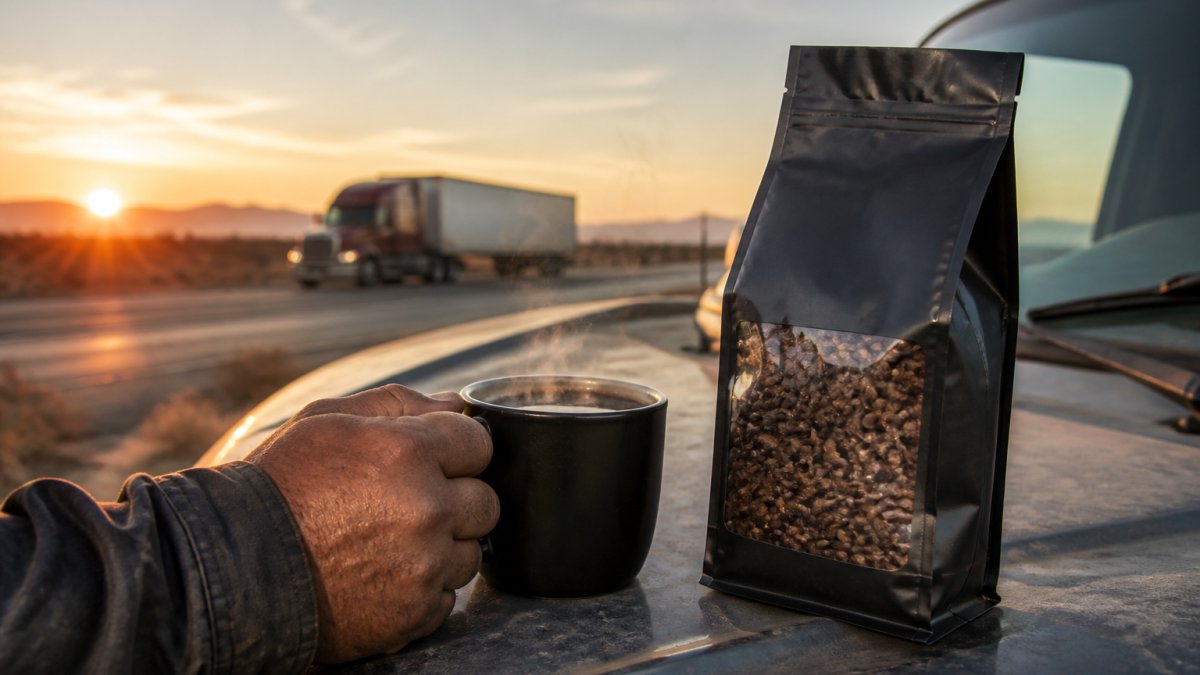
At Blacktop Life Coffee Co., we've built our whole business around that second group. Our founder spent years behind the wheel, so we know what a thermos of weak gas-station coffee does to hour nine of a haul. Below, we break down where your money actually goes, how to spot quality without getting fooled, and when premium coffee stops being worth it.
Where Your Money Goes: From Farm to Bag
Most of what you pay for isn't the beans. It's everything around them.
Green coffee is a commodity, traded globally like any other raw material, and the farmgate price is only one line item.
That matters for a simple reason: coffee is perishable. Oxygen, heat, and light degrade the oils that carry flavor and aroma. A bag that sat in a warehouse for months tastes flat no matter how good the bean was.
The Real Cost Per Cup vs. Truck Stop Coffee
Per-cup math is where premium coffee usually wins.
A bag of whole beans brewed at home or in the cab works out to a fraction of the cost of a single drive-thru cup. The higher upfront price per bag is real, but it's spread across many more servings. Truck stop coffee looks cheap until you buy it five times a week.
Here's the trade-off in plain terms:
| Option | Upfront Cost | Cost Per Cup | Energy Consistency |
|---|---|---|---|
| Truck stop drip | Low | Low per visit, high over a month | Inconsistent |
| Gas station thermos | Low | Low | Weak, fades fast |
| Premium bag, brewed yourself | Higher per bag | Lowest per cup | Consistent |
| Café espresso | Highest per cup | Highest | Strong but short-lived |
The variable nobody talks about is consistency. You know what you're getting every time you brew your own.
How to Choose High Quality Coffee Beans Without Getting Fooled
Learning how to choose high quality coffee beans comes down to four checks: roast date, whole bean versus pre-ground, origin transparency, and smell. Skip the marketing language on the front of the bag and read the back.
- Roast date, not best-by date. A best-by date tells you nothing. A roast date tells you everything.
- Whole beans over pre-ground. Grinding exposes surface area to oxygen. Ground coffee stales in days; whole beans hold for weeks.
- Named origin. "Blend of exotic beans" is a red flag. A specific region, farm, or cooperative signals traceability.
- Smell test. Fresh beans smell sweet and complex. Stale beans smell like cardboard.
A common mistake is judging quality by price alone. Plenty of mid-priced roasters beat luxury brands on freshness, and plenty of expensive bags sit on shelves long past their peak.
The Difference Between Arabica and Robusta (And Which One Fuels a Long Shift)
The difference between arabica and robusta is caffeine content and flavor profile. Arabica is smoother, more acidic, and carries the fruity or chocolate notes most people associate with good coffee. Robusta has roughly double the caffeine, a harsher, more bitter taste, and more body.
For a desk job, arabica usually wins on taste. For a 14-hour haul or a full day on a job site, robusta's extra kick is the point. Many blends mix both, using arabica for flavor and robusta for staying power.
Sensory Evaluation: How to Taste Whether Expensive Coffee Is Actually Better
Sensory evaluation is a structured way to judge coffee beyond "I like it." Professionals score aroma, acidity, body, sweetness, and aftertaste separately, then compare. You can do a stripped-down version at home.
Try this method:
- Smell the dry grounds before brewing.
- Smell again right after adding hot water.
- Taste a small sip and note the first impression.
- Wait, then check the aftertaste. Does it linger pleasantly or turn bitter?
- Compare side by side with your usual brand.
The side-by-side comparison is the part most people skip, and it's the only one that answers the real question. Your palate adjusts fast.
This is the gap most guides miss: they tell you what to look for but never tell you to test against a baseline.
Is Organic Coffee Worth the Extra Cost? Sourcing Ethics and Sustainability Standards
Is organic coffee worth the extra cost? For many buyers, yes, but not for the reason the label implies. Organic certification covers how the crop was grown, not how it tastes.
Certifications like organic, Fair Trade, and Rainforest Alliance each verify different things. None of them guarantee a better cup, but they do reduce the odds you're buying from a supply chain with opaque labor or environmental practices.
USDA Organic certification standards explains what the organic label legally requires, and it's narrower than most shoppers assume.
If ethical sourcing matters to you, buy from roasters who name their farms and publish sourcing details. Transparency is worth more than a logo.
Diminishing Returns: When Premium Coffee Stops Being Worth It
Diminishing returns hit coffee hard, and the curve is steeper than most buyers expect. The jump from commodity to decent is huge. The jump from decent to very good is noticeable. The jump from very good to elite is small, and it costs the most. Most guides stop there. The useful question is where the plateau actually sits for your setup, because that's the number that tells you when to stop paying.
The quality-plateau framework
Think of coffee value as three stacked tiers:
- Tier 1, Commodity to competent (roughly the bottom third of the specialty shelf). This is where the biggest quality gain per dollar lives. Fresh roast date, whole bean, named origin, and a decent grinder move you from 'bitter brown water' to 'genuinely good coffee.' The cost jump here is modest and the payoff is large.
- Tier 2, Competent to very good (the middle of the shelf). Smaller improvements: cleaner cup, more distinct origin character, better consistency bag to bag. The cost jump is real but still justifiable for daily drinkers.
- Tier 3, Very good to elite (top of the shelf and above). Micro-lot single origins, competition-grade beans, rare processing methods. The gains are subtle, often only visible in a side-by-side cupping, and the price can double or triple. This is where most working drinkers stop getting their money's worth.
A common pattern among experienced buyers is that the plateau for daily drinking sits in Tier 2. The plateau for deliberate tasting sits higher, but only if the rest of your setup can reveal the difference.
What your setup can actually reveal
Diminishing returns aren't just about the bean, they're about the whole chain from bag to cup. A high-end single origin brewed in a moving cab with a basic drip setup loses the subtle notes you're paying for. You're buying nuance your equipment and environment can't deliver.
The variables that most limit what you can taste:
- Grind consistency. A burr grinder exposes more of the bean's character than a blade grinder. If you're using a blade grinder, upgrading it will do more for your cup than upgrading the bean.
- Water. Coffee is mostly water. Very hard or heavily chlorinated water flattens flavor regardless of bean quality.
- Brew ratio and temperature. Off-ratio or under-temp brewing under-extracts, which reads as sour or weak, and makes you blame the bean.
- Time since roast. Past a few weeks, even elite beans fade toward Tier 2 flavor.
A practical test for your own sweet spot
You don't need a lab. Run a simple side-by-side:
- Buy one bag from Tier 2 and one from Tier 3 at the same time.
- Brew both the same way, same day, same water, same ratio.
- Taste them blind, have someone else pour if you can.
- Note whether you can reliably tell which is which, and whether you prefer the more expensive one.
If you can't tell them apart, or you prefer the cheaper one, your personal plateau is below Tier 3, and that's useful information, not a failure of taste.
For most working people, the sweet spot sits in the middle: fresh, well-sourced beans at a fair price, brewed consistently. Past that point, you're buying rarity, not energy, and rarity is a fine thing to buy, as long as you know that's what you're paying for.
Buying Expensive Coffee for Life on the Road: What to Check Before You Order
Ordering coffee online works fine on the road if you check three things: shipping speed, packaging, and storage guidance.
- Does the roaster print a roast date on the bag?
- Is the bag valve-sealed to release gas without letting oxygen in?
- How fast does it ship, and can it reach a truck stop or job site address?
- What's the return policy if the first bag doesn't land?
- How should you store it in a cab or van? Cool, dark, airtight.
Storage matters more than most people think. A cab dashboard in summer will cook your beans. Keep the bag sealed and out of direct sun.
This is where we built Blacktop Life Coffee Co. around a specific problem: coffee that has to survive a moving life and still deliver. Our blends are sourced from sustainable farms and designed for people who need steady energy.
Conclusion
The real challenge isn't finding expensive coffee. It's finding coffee that earns its price for how you actually drink it. Freshness, caffeine content, and consistent brewing matter more than a fancy label, and per-cup math usually favors brewing your own over buying by the cup.
That's the gap Blacktop Life Coffee Co. was built to fill. Our highway-inspired blends come from sustainable farms and are designed to hold up in a cab, a van, or a job site.
Frequently Asked Questions
Does expensive coffee actually have more caffeine?
Not necessarily. Caffeine content depends mostly on the bean species and roast level, not the price tag. Robusta beans naturally contain more caffeine than arabica, which is why some budget blends hit harder than single-origin arabica. If sustained energy is your goal, check whether the blend includes robusta or ask the roaster for caffeine guidance. Price reflects growing altitude, processing method, and sourcing ethics more than it reflects caffeine strength.
Is there a noticeable difference between cheap and expensive coffee?
Yes, but mainly in flavor clarity and consistency. Expensive coffee typically comes from higher-altitude farms, is picked riper, and is roasted in smaller batches, which reduces defects like bitterness and ash. The difference shows up most in black coffee. If you load your cup with sugar and creamer, the gap narrows fast. For daily black coffee drinkers on the road, the upgrade is usually noticeable within the first few sips.
Is it worth buying premium coffee for daily use?
Run the math per cup, not per bag. A bag of premium whole beans usually costs more upfront, but if it brews 30 to 40 cups, the per-cup cost often lands below a single truck stop refill. The question becomes whether you get more usable energy and better taste per dollar. If you drink two or more cups a day, premium beans frequently win on cost-benefit analysis alone, especially when you brew them yourself.
How can you tell if coffee is high quality?
Look for four signals: a roast date printed on the bag (not just a best-by date), whole beans instead of pre-ground, a named origin or farm rather than a vague blend label, and a roast level matched to your brewing method. Freshness matters more than almost anything else. Beans roasted within the last two to four weeks taste noticeably different from bags that have sat on a shelf for months.